
Italian design brands are admired all over the world.
Italian craftsmanship, creativity, materials, and aesthetics are part of the cultural heritage that few countries can match. Global demand for Italian design is strong, and international fairs, marketplaces, digital platforms, and logistics are opening up lots of new opportunities for growth.
Yet, when it comes to digital visibility and international discoverability, many Italian design and furniture brands are still underperforming compared to their Italian or French fashion and luxury counterparts or are less discoverable than other international design brands. In part because of how product communication, content, and SEO are approached or,often not approached.
This gap can be easily flipped around into opportunity.
The Digital Advantage Fashion and Luxury Built Early
Fashion and luxury brands started investing heavily in e-commerce, product storytelling, and multilingual SEO years before most design companies. International online e-commerce competition and market crisis forced brands online fast. They started simple, they outsourced, then they internalized, they ran trial and error and they gradually nailed it. Over time, they built digital ecosystems that combine:
- Structured content
- Great digital assets
- Detailed product descriptions & technical descriptions
- Good storytelling and brand tone-of-voice
- Multilingual websites, often in around 8 strategic languages
- SEO-driven architecture and contents
This approach allowed them to gain global online visibility, on-page rankings, and growth. So they are perfectly positioned to experiment with optimized contents in the increasingly AI-powered search results.
Design brands seem to follow a different growth path. Their success is often built through fairs, distributors, project networks, and physical showrooms. This model still works to a degree, but discovery today happens faster primarily online, even in B2B contexts. Architects, buyers, retailers, and partners now research digitally long before the first meeting. Digital communication strategies and multilingual E-commerce pages are a central part of the sales funnel, not just a support channel.
From Great Visual Assets to Effective Semantic Assets for Growth
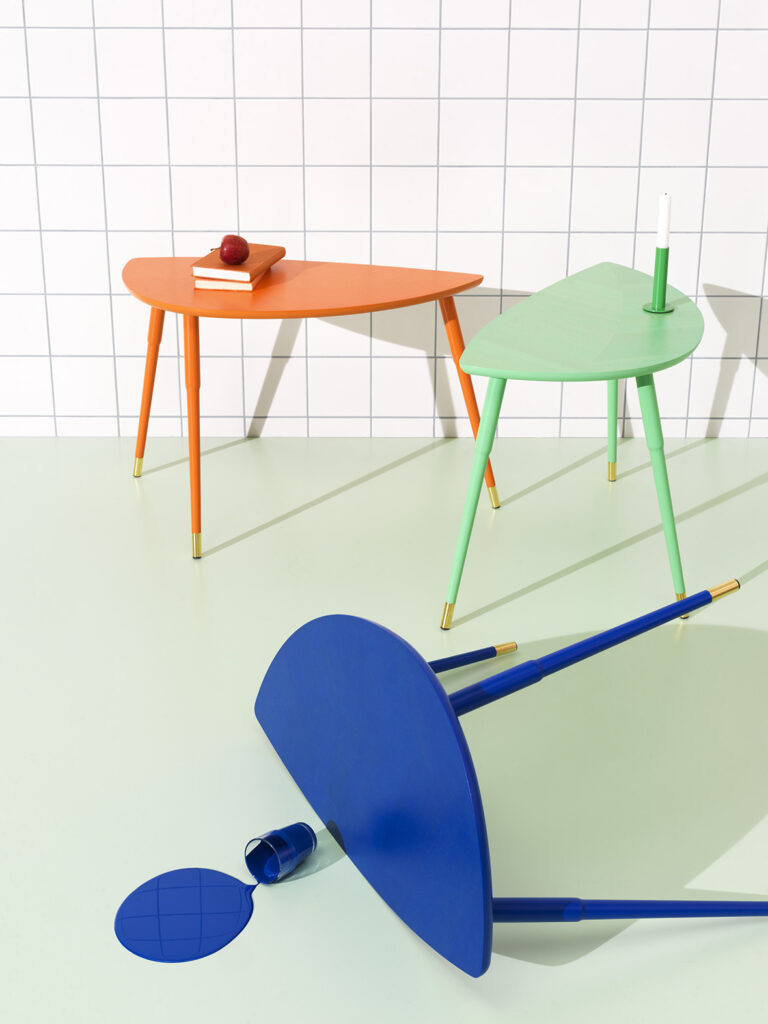
Design brands are genearlly great at visual communication. Beautiful objects, curves, lines, colors, materials. Of course, a design piece itself usually does the communicating. Photography, video, exhibition design, catalogs, and brand imagery are often well considered. But digital discovery has been mostly rooted in text and copywriting, in semantic assets not visuals. Even visuals are tagged and described for accessibility and search. Google lens, and AI-powered search should help moving forward but discoverability is based on product descriptions, terminology, structured content, and multilingual text (and of course technical seo too.)
Search engines, marketplaces, and AI systems do not interpret beauty. They interpret language.
So SEO and structured product copy combined with translation and localization for design brands opens up a completely new level of international visibility.
When language becomes a strategic asset, brands get:
- Stronger organic search performance
- Higher-quality international traffic
- Clearer buyer understanding
- Improved conversion
- Better performance on global marketplaces
- Growth!
Why Product Descriptions Are Strategic Growth Assets
Product descriptions in the design sector have traditionally focused on mood, concept, and storytelling. Which reflects the creative soul of the industry. Often they may be just extracts of technical descriptions full of jargon but difficult to understand. A good product description needs to answer all the product questions, it needs high readability, technical accuracy, and search optimization all while representing the heritage and soul of the brand.
Modern product descriptions now serve multiple roles:
- They help buyers understand complex or high-value products
- They support architects and buyers and specifiers
- They improve search rankings
- They feed AI-generated summaries
- They increase e-commerce conversion
This is why AI-powered product copywriting combined with human review can be a great growth lever. In the hands of a content expert. You get speed and consistency with brand tone and design sensitivity.
Brands That Do This Well
Several leading design and furniture brands show how product communication can combine elegance, clarity, and SEO performance.
Vitra, for example, provides detailed product pages that balance storytelling, technical detail, materials, dimensions, and usage scenarios. Their product descriptions are structured, readable, and informative, making them effective both for buyers and search engines.
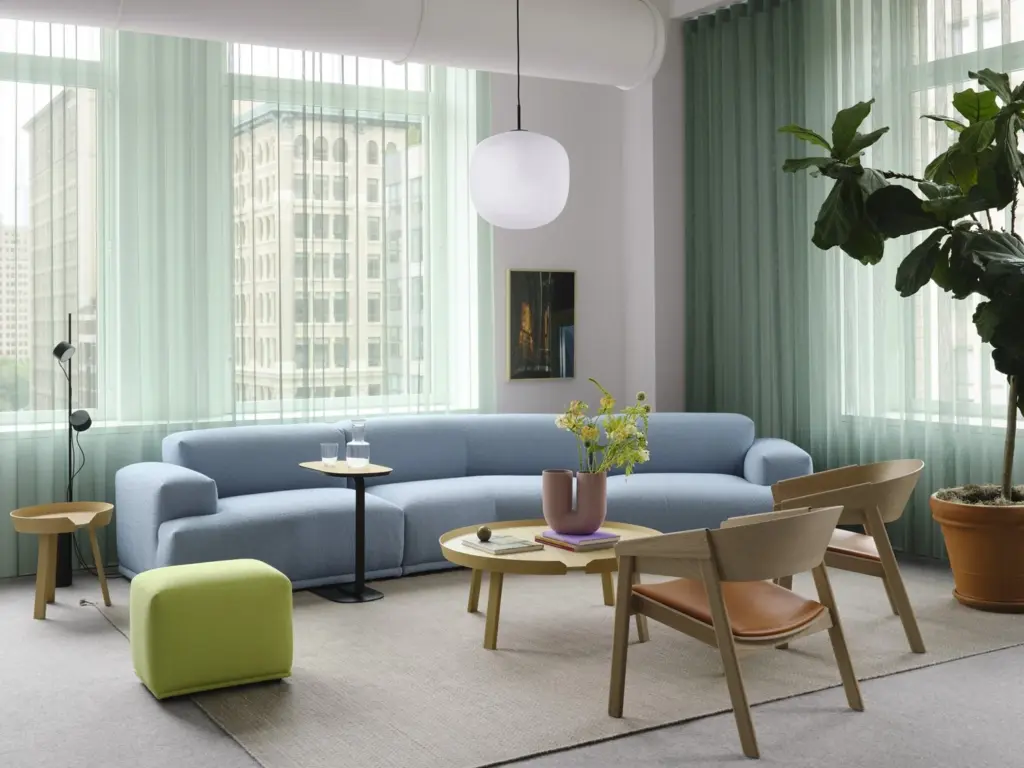 Muuto offers another strong example. Their product descriptions combine emotional storytelling with clear functional explanations, material details, and design intent. This makes their content easy to understand, easy to translate, and potentially highly effective for international markets.
HAY uses simple, accessible language that explains products clearly while preserving a strong brand voice. Their product pages are structured for readability and usability, making them work well both for consumers and professional buyers. Their products optimize for search in many household item searches.
IKEA, although operating at a very different scale, remains one of the strongest global references for product communication. Their product descriptions are designed to maximize clarity, usability, and international consistency, supporting massive multilingual e-commerce and marketplace operations. They are currently working on large-scale knowledge graph and ontology initiatives as part of their digital transformation efforts.
LAGO has perfected the craft of speaking to the client and search engines effortlessly. Their product sections are useful to both: one gets an immersive read into their solutions and spaces, the latter all the technical info for intent search. The result is a blog-like text that leads you through the page, and eventually to your final decision.
These brands demonstrate that great product copy is not about writing more, but writing better.
Storytelling and Clarity: The Balance That Drives Results
Design storytelling remains one of the sector’s strengths. The opportunity lies in combining emotional narrative with technical information and structured language written for purpose.
High-performing product content integrates:
- Brand voice
- Emotional storytelling
- Technical explanation
- Material and finish clarity
- Buyer-focused benefits
- Search terminology
This balance improves not only search ranking, but also click-through rates, time on page, and conversion.
This is where multilingual professional copywriting and SEO services for design and furniture brands play an important role, ensuring that storytelling remains consistent while semantic clarity and discoverability are localized and preserved across languages.
Why Design Terminology Is a Powerful SEO Asset
Design and furniture industries use highly specialized vocabulary: materials, finishes, production techniques, construction systems, certifications, and sustainability standards.
When this specialized design terminology is structured properly, for the reader, it becomes a SEO and GEO asset. Search engines and AI systems reward language that clearly explains what a product is, how it is made, and how it is used.
This makes product description optimization for furniture and design e-commerce one of the highest-return digital investments available today.
PIM, DAM, and the Missing Language Layer
Some design brands already use advanced systems to manage their digital ecosystems. DAM platforms store images and videos, while PIM systems manage technical product data.
However, language workflows often remain fragmented. Translation, localization, and SEO content creation are rarely integrated directly into these systems. Making content management overwhelming and slow.
By integrating systems and embedding translation and localization workflows into PIM and CMS platforms, brands can:
- Launch products faster
- Maintain terminology consistency
- Scale multilingual content efficiently
- Improve international SEO performance
This transforms your product communication from a general marketing function into a scalable operational engine for growth.
From B2B to Marketplaces and Global E-commerce
Traditionally, design brands operated mainly through distributors, retailers, architects, and contract projects. Today, growth increasingly flows through:
- Global marketplaces
- Brand-owned e-commerce
- B2B digital platforms
- International direct sales
These channels need clear, structured, multilingual, and SEO-optimized product content. Every platform or marketplace displays information in a different way. So control of your semantic assets is important. In digital environments, images attract attention, but text drives search, our understanding, ranking, and leads to conversion.
This is why e-commerce localization for furniture brands has become a strategic priority.
A Major Growth Opportunity for Design Brands
The global market is increasingly accessible. International demand, digital platforms, and AI have lowered barriers to entry and give even small brands expanded visibility.
Design brands that invest in:
can create exponential international growth, building long-term brand authority while increasing sales performance.
SEO, GEO & Product Content Localization for Design Brands Working Internationally
Specialized solutions for translation, localization, multilingual SEO, and AI-powered product copywriting for design, furniture, and Made in Italy brands.